Consumer Studies Grade 12 | Final Exam Revision | Food and Nutrition
Consumer Studies Grade 12 | Final Exam Revision | Food and Nutrition
Study the label below and then answer the questions that follows.
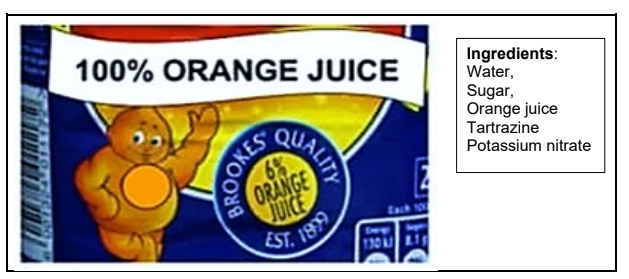
Question: Identify the misleading and false claim about the above product. Motivate your answer.
The misleading and false claim about the product is that it is “100% or original orange juice.”
- Misleading Claim: The label states the product is 100% orange juice, which suggests it is made purely from orange juice with no added ingredients.
- Evidence of False Claim: The ingredient list reveals that the product contains water, indicating it has been diluted. Because of this addition, it cannot truly be considered “100%” orange juice, as the claim would suggest. This misleads consumers into believing they are purchasing a pure juice product when, in reality, it contains added water.
Question : Identify the ingredients used in the product that might cause allergic conditions. Determine the purpose of these ingredients in the product. Tabulate your answer
| Ingredients | Purpose |
|---|---|
| Tartrazine | 1. Serves as a colorant. |
| Potassium Nitrate | 2. Acts as a preservative. |
- Tartrazine: This is a synthetic yellow colorant often used to enhance the visual appeal of food. However, it is also known to cause allergic reactions or sensitivities in some individuals, which can include symptoms like rashes or respiratory issues.
- Potassium Nitrate: Potassium nitrate is included as a preservative, which helps to extend the shelf life of the product by preventing the growth of spoilage organisms. However, similar to tartrazine, it may trigger allergic reactions in sensitive individuals.
Question : Give the reasons why antioxidants are used as food additives.
Antioxidants serve several important purposes in food preservation and quality enhancement:
- Preservation of Food Quality: Antioxidants help preserve the quality of food, which means they prevent spoilage, allowing the product to stay fresh for a longer period.
- Prevention of Rancidity: Antioxidants help prevent rancidity in fats, which can develop an unpleasant taste and odor over time. This is particularly important in products such as margarine, cooking oil, biscuits, potato chips, and soup mixes.
- Maintenance of Color in Produce: Antioxidants delay enzymatic browning or discoloration in fruits and vegetables. This is beneficial for products like fresh-cut fruit, fruit juice, canned vegetables, and soft drinks, where they help maintain a fresh, appealing appearance.
Question : Write a paragraph in which you refer to the benefits that organically grown food may have on the natural environment.
Organically grown food provides various environmental benefits, contributing to a healthier, more sustainable ecosystem:
- Reduction of Harmful Chemicals: Organic farming avoids the use of synthetic chemicals, pesticides, herbicides, and fertilizers, which can be damaging to soil, water, and surrounding wildlife. This practice ensures that no toxic residues are left behind in the environment.
- Cleaner Water and Reduced Pollution: Organic farming practices help prevent water contamination and pollution, as no chemical runoff occurs from these fields, keeping nearby water sources cleaner and safer.
- Improvement in Soil Quality: Organic farming enhances soil health through practices such as composting and crop rotation. These methods enrich the soil with nutrients, prevent soil erosion, and encourage the growth of beneficial organisms.
- Enhanced Biodiversity and Animal Welfare: Organic farming fosters greater biodiversity, as the absence of pesticides allows diverse plant and animal species to thrive. Additionally, organic livestock farming provides humane conditions for animals, contributing to an ethical approach to agriculture.
Question: List the types of information that must appear on a food label.
A food label must contain several types of information to assist consumers in making informed choices:
- Product and Manufacturer Information: The name of the product, manufacturer details, and country of origin should be clearly provided to allow consumers to know the brand, origin, and producer of the product.
- Ingredient List: A comprehensive list of ingredients should be displayed, allowing consumers to understand what is included in the product.
- Nutritional Information: This includes values such as calories, macronutrient breakdown (carbohydrates, proteins, fats), and any specific nutritional claims. This is essential for consumers with dietary restrictions or health concerns.
- Storage Instructions: Clear storage guidelines are essential for maintaining product quality and safety after purchase.
- Allergen Information: Important allergens present in the product must be highlighted to protect individuals with allergies.
- Date Stamp: A sell-by date, best-before date, or expiration date ensures consumers use the product within a safe period.
Study the picture below and answer the questions that follow.

Question : Identify the food-related health condition.
The food-related health condition shown in the image is osteoporosis.
Question: Define the food-related health condition.
Osteoporosis is a condition characterized by a reduction in bone density and strength due to inadequate calcium replacement.
Effect: As bones lose calcium and other essential minerals, they become thinner, less dense, brittle, and weak, increasing the risk of fractures and breaks
Cause: Osteoporosis results when calcium is withdrawn from bones more rapidly than it is replaced, often due to a diet low in calcium.
Consumer Studies Grade 12 | Final Exam Revision | Past Paper Questions and Answers | The Consumer
- Structure of Osteoporotic Bones: Osteoporotic bones have a porous structure, which means they have larger gaps within the bone tissue than normal. This porosity makes the bones more fragile and likely to break under minor pressure or impact.
Question : Examine the reasons why a woman with a small body frame and in her fifties is more prone to develop osteoporosis.
Several factors make women with a small body frame and over the age of fifty more susceptible to osteoporosis:
- Hormonal Changes: Women in their fifties are often post-menopausal, a phase that leads to decreased levels of estrogen—a hormone that plays a crucial role in protecting bones against mineral loss. The drop in estrogen accelerates bone loss, increasing osteoporosis risk.
- Body Composition: Women with a small body frame naturally have less bone mass than those with larger frames. This reduced bone density means they have a smaller reserve of bone to lose before osteoporosis becomes a significant risk.
- Gender Susceptibility: Females, in general, are more prone to developing osteoporosis due to naturally lower bone mass compared to males. This difference is exacerbated by age-related hormonal changes.
- Calcium and Vitamin D Deficiency: As people age, their bodies often struggle to absorb calcium and vitamin D efficiently. Without these nutrients, the body cannot build new bone tissue effectively, weakening bones further and increasing the likelihood of osteoporosis.
Question : Explain what is meant by foodborne disease.
Foodborne diseases are illnesses caused by consuming food or beverages contaminated with harmful pathogens such as bacteria, viruses, or parasites.
- Pathogen Transmission: These diseases are transmitted through the ingestion of contaminated food or water, which may contain pathogens from various sources, including improperly handled or stored food.
- Health Impact: When these pathogens enter the body, they can lead to infections, causing symptoms like nausea, vomiting, diarrhea, and abdominal pain. In severe cases, foodborne diseases can result in serious health complications.
Question : List the guidelines to prevent the transmission of foodborne diseases.
To prevent foodborne diseases, it is essential to follow these guidelines:
- Personal Hygiene: Good personal hygiene is crucial. This includes washing hands thoroughly before handling food, after using the restroom, and after handling raw foods to prevent contamination.
- Hygienic Food Preparation and Storage: Keeping food preparation areas clean and sanitized helps avoid cross-contamination. Storing food at the correct temperatures also prevents the growth of harmful bacteria.
- Proper Cooking: Cooking food thoroughly, especially meat, poultry, and seafood, ensures that any harmful bacteria present are destroyed.
- Temperature Control: It is vital to maintain hot foods at temperatures above 60°C and cold foods at 5°C or lower to inhibit bacterial growth.
- Avoid Cross-Contamination: Use separate cutting boards for raw meat and ready-to-eat foods to prevent the spread of bacteria.
Read the extract below and answer the questions that follow.
| REAL LIFE IMPACT OF HEPATITIS A: THE STORY OF LYNN On 5 February, Ben and Lynn decided to take a break from their busy schedules for a dinner-date with their daughter at Chi’s Restaurant in the Beaver Valley Mall. Lynn had the chicken pita and Ben had a lobster pita. Lynn first fell ill on February 27. That evening she noticed that she felt hot and fatigued. She drank some juice and went to bed early to deflect the illness. Lynn’s temperature quickly spiked to 42 oC, and she began to shake uncontrollably. The doctor’s assessment was, that Lynn, had begun to suffer from the effects of Hepatitis A. Lynn has immediately been hospitalised. |
Question.: Give another name for Hepatitis A.
Another name for Hepatitis A is infective jaundice.
Question : Mention the relationship between February 5th and February 27th.
The relationship between February 5th and February 27th represents the incubation period for Hepatitis A, which typically ranges from 12 to 50 days. This period is the time from initial exposure to the virus until symptoms begin to appear.
Question : Predict three possible causes of Lynn’s illness.
Three possible causes of Lynn’s illness include:
- Contaminated Food: The food Lynn consumed, particularly the chicken pita, may have been contaminated with the Hepatitis A virus, potentially due to improper handling.
- Infected Food Handler: A chef or food handler at the restaurant may have been infected with Hepatitis A and failed to wash their hands properly after using the restroom, thereby transferring the virus to the food.
- Contaminated Water: The water used in preparing or washing ingredients could have been contaminated with the virus, posing an additional risk for transmission.
Study the information below that appeared on a label for rusks and answer the question that follows.
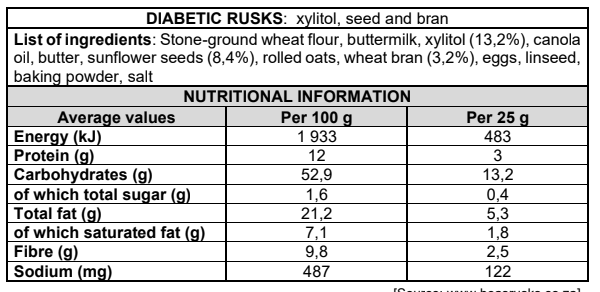
Question : Evaluate the suitability of the rusks for a person with diabetes.
The suitability of these rusks for someone with diabetes can be evaluated by examining both positive and negative aspects of its nutritional profile:
- High Carbohydrate Content: The rusks contain a high level of carbohydrates, which can cause blood glucose levels to spike, making it unsuitable for diabetics if consumed in excess.
- Fat Content: The rusks have high levels of saturated fat from ingredients like butter, buttermilk, and eggs, which may increase the risk of heart disease, a condition diabetics are already at higher risk of developing.
- Moderate Sodium Levels: The sodium content is moderate, which may lead to hypertension in diabetics if consumed frequently.
- Low Glycemic Index: With a low sugar content and high fiber content from oats and bran, these rusks likely have a low glycemic index (GI), meaning glucose is released slowly into the bloodstream, which can help manage blood sugar levels.
- Non-Sugar Sweetener: The inclusion of xylitol, a non-sugar sweetener, is beneficial for diabetics as it doesn’t spike blood glucose levels like traditional sugar.
- High Fiber Content: The high fiber content, especially soluble fiber from oats, is advantageous as it helps to lower cholesterol levels, reducing the risk of coronary heart disease.
- Moderate Protein Content: The presence of moderate protein from eggs and buttermilk helps in tissue building and reduces strain on the kidneys, which is essential for diabetic