Consumer Studies Grade 12 | Study guide | Past Paper Revision | Clothing 1
Consumer Studies Grade 12
Get free Consumer Studies Grade 12 study resources: Including Consumer Studies Grade 12 notes, Consumer Studies Grade 12 study guides, Consumer Studies Grade 12 past exam papers, to ace your final exams.”
Question
Name the characteristics of classic fashions.
Classic fashions remain popular for a long time and are considered timeless because they last over many seasons without going out of style. Unlike fleeting trends that quickly become outdated, classic styles maintain their relevance and appeal, making them a reliable choice for long-term wear.
They are always considered tasteful, meaning they reflect good style and elegance that appeals to a wide audience. This tasteful quality allows classic fashions to be suitable for many occasions and ensures they convey a sense of refined sophistication.
Classic fashions experience occasional subtle changes or updates. These small modifications help keep the style current while preserving its original character, preventing the fashion from feeling old or outdated.
A large group of people continually accepts classic fashions, which strengthens their lasting popularity. Widespread acceptance by many ensures these styles remain in demand over time and become a shared cultural standard.
Classic fashions are characterised by simplicity. Their designs are clean, straightforward, and free from excessive decoration, which makes them versatile and easy to combine with other wardrobe pieces. This simplicity contributes greatly to their timeless appeal.
Question
Give examples of sustainable textiles.
Bamboo is an example of a sustainable textile because it grows quickly and requires little to no pesticides or chemicals during cultivation. This makes it an environmentally friendly option that supports low-impact farming practices while still producing soft, breathable fabric.
Hemp is another sustainable textile known for its minimal water usage and ability to grow without synthetic chemicals. Its strong fibers make it highly durable, and its natural resistance to pests means it doesn’t need harmful treatments, reducing environmental damage.
Organic cotton is produced without using harmful pesticides or synthetic fertilizers. This method helps maintain soil health, supports biodiversity, and reduces chemical pollution in surrounding ecosystems, making it a much cleaner alternative to conventional cotton.
Soya fabric is made from soybean residues, which are by-products of food production. By using agricultural waste to create textiles, soya fabric helps reduce landfill use and encourages the full utilization of natural resources in a sustainable way.
Silk, when produced responsibly, is a natural and biodegradable textile. If created through eco-friendly practices, such as cruelty-free or organic methods, silk becomes a luxurious yet sustainable option that avoids the use of harmful synthetic materials.
Question
Explain the term: Eco-friendly fabrics.
Eco-friendly fabrics have a low carbon footprint, meaning they release fewer greenhouse gases during their production. This contributes to reducing the negative impacts of climate change and supports more sustainable textile practices.
These fabrics are produced from crops that do not require pesticides or chemicals to be grown. Avoiding harmful chemicals helps prevent pollution of soil and water, ensuring safer conditions for both the environment and human health.
Eco-friendly fabrics use less or little water during production. Since the textile industry is known for high water consumption, choosing materials that require minimal water helps conserve this vital natural resource and addresses water scarcity issues.
Another essential quality of eco-friendly fabrics is that they create less waste and are biodegradable. This means they naturally break down over time, leaving little to no harmful residue in the environment, unlike synthetic fabrics that may take hundreds of years to decompose.
These fabrics are often made from renewable or reused resources. Renewable resources can be grown repeatedly, and reused materials reduce the need for new production, both of which help conserve raw materials and lower environmental impact.
The overall production of eco-friendly fabrics is done in an environmentally friendly way. This includes reducing energy use, limiting emissions, and implementing methods that cause minimal damage to the ecosystem.
Natural or no harmful dyes could be used in the production of eco-friendly fabrics. This is crucial because conventional dyeing processes often release toxic chemicals into rivers and land, while safer dyeing protects both the environment and people’s health.
Question
Explain the term: Fashion fads.
Fashion fads are often seen in accessories, which include items like jewelry, hats, or handbags that suddenly gain popularity. These small but eye-catching items are easy for people to adopt quickly, making them ideal vehicles for fast-moving trends.
These fads are in high demand because people want to follow the latest craze. The desire to stay trendy or fit in with peers often drives individuals to buy and wear these fashionable items, even if only for a short time.
Fashion fads catch on among a large group of people. They spread quickly through communities, social media, celebrities, and influencers, creating a wave of popularity that grows rapidly across different groups.
One key characteristic of fashion fads is that they are short-lived and have a short lifecycle. Most fads last only for one season or a limited time before people lose interest and move on to something new.
They become popular suddenly and disappear quickly. This fast rise and fall means they are not intended to be long-lasting. As soon as a new trend appears, the old fad fades away, making room for the next fashion wave.
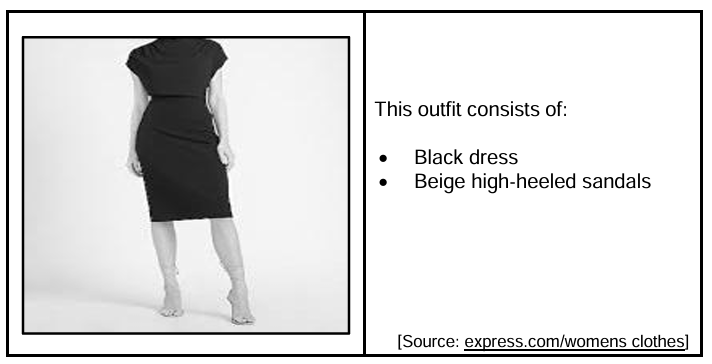
Study the picture below and answer the question that follows.
Get free Consumer Studies Grade 12 study resources: Including Consumer Studies Grade 12 notes, Consumer Studies Grade 12 study guides, Consumer Studies Grade 12 past exam papers, to ace your final exams.”
Question
Motivate the suitability of the colour and style of the outfit for the workplace.
The black dress in the outfit is highly versatile and professional, making it a suitable choice for the workplace. The choice of any colour accessories, shoes, or bag would match with the dress, which means it can be mixed and matched easily. This versatility allows the wearer to personalise the look while still maintaining a neat and formal appearance.
One of the key strengths of this outfit lies in its tone and design. The colour of the dress is neutral, which is ideal for office settings as it reflects professionalism and is not distracting. Furthermore, the style is basic, classic, has simple lines, which gives it a timeless look that remains appropriate in work environments regardless of changing trends. This classic design means the dress will last for many years without appearing outdated.
Black can be worn in the day, at night, dressed up, down, formal, professional, informal, making it one of the most flexible colours in professional attire. Whether the wearer is attending a board meeting, working in a standard office day, or transitioning to a formal evening function, this colour adapts seamlessly to every occasion.
Additionally, the colour of the dress can make the wearer look slimmer, which contributes to a more flattering silhouette and can boost the wearer’s confidence—an important factor in professional environments where personal presentation plays a role.
In terms of modesty and appropriateness, the dress is not revealing as it covers the shoulders and is below the knee. This modest design ensures that the outfit meets workplace dress codes and promotes a respectable, professional image.
Lastly, the style of the dress would suit all figure types. Its classic cut and clean lines make it universally flattering, ensuring that people of all shapes and sizes can wear it comfortably and confidently in a professional setting.
Question
In 2020 there were no major fashion changes around the world nor in South Africa. Explain how the following factors contributed to the statement above:
1, Social Factors
One of the key social factors that contributed to the lack of fashion changes in 2020 was the strict lockdown measures put in place globally and in South Africa. Due to the lockdown, people did not socialise, attend social events, visit, or go out as much. Movement was restricted and curfews were put in place at night. These restrictions meant that people were largely confined to their homes, with very limited opportunities to interact socially or be seen in public. As a result, there was a significant drop in interest and motivation to update wardrobes. People no longer felt the need to shop for new outfits, accessories, or trendy pieces, since there was no need to buy new fashions for events or public appearances that no longer took place.
Another important factor was the change in work routines. With companies implementing remote work policies, people started working from home, which drastically reduced the need for formal or professional attire. Many no longer had to dress up for daily commutes or office meetings. Even virtual meetings, which replaced in-person office interactions, often required only a neat appearance from the waist up. This change in routine led to a preference for loungewear and relaxed garments. Therefore, the need to dress up or dress professionally for virtual meetings declined, and people started wearing more comfortable and casual clothes as they stayed at home.
The limitations on international mobility also influenced fashion trends. Travelling between countries was prohibited or limited, which meant that people were unable to physically explore or bring back foreign fashion trends. This disrupted the flow of global styles and designs. As a consequence, there was little exposure to new fashions from other countries, reducing the inspiration and influence that international fashion typically has on local trends.
Moreover, there was little opportunity for celebrities to show off new fashions at events, as most award shows, premieres, and public gatherings were cancelled or transitioned to virtual formats. Without the usual red carpet events and paparazzi moments, designers lost a crucial platform for launching and promoting new styles. The absence of these public showcases meant that fashion inspiration and visibility among the general public were significantly reduced.
Get free Consumer Studies Grade 12 study resources: Including Consumer Studies Grade 12 notes, Consumer Studies Grade 12 study guides, Consumer Studies Grade 12 past exam papers, to ace your final exams.”
2, Economic Factors
From an economic perspective, the fashion industry faced massive disruptions that slowed down production and innovation. One of the biggest blows came when factories producing clothes and textiles shut down temporarily, either due to lockdown rules or supply chain interruptions. This directly impacted manufacturing capabilities and meant that fewer new garments were being made. As a result, the rate of fashion change slowed because designers and brands were unable to produce and distribute new collections as planned.
Further compounding the issue was the disruption in international trade. Clothing imports reduced due to restrictions on travel between countries, limiting the availability of foreign-made garments and accessories. Without these imports, many countries—including South Africa—experienced a reduced selection of clothing, making it harder for new trends to spread and take hold.
In addition, most clothing stores were closed at the beginning of lockdown, meaning consumers could not physically browse or shop for clothes in malls or boutiques. Even online shopping faced delays due to delivery issues and stock shortages. Therefore, consumers could not buy new clothes, contributing to a dramatic decline in clothing sales and the visibility of new trends.
At the same time, the world was plunged into an economic crisis. There was a world-wide recession, and many individuals faced sudden unemployment or salary reductions. Some consumers lost their jobs or worked at reduced hours, which meant that household budgets became extremely tight. With financial priorities shifting to essentials like food and housing, people had to make difficult decisions about spending. As a result, disposable income was reduced, leaving fewer resources available to spend on non-essential items such as fashion. This financial pressure meant that for many, buying new clothes was no longer a priority.
Religion Studies Grade 12 | The role of oral tradition in religion
Get free Consumer Studies Grade 12 study resources: Including Consumer Studies Grade 12 notes, Consumer Studies Grade 12 study guides, Consumer Studies Grade 12 past exam papers, to ace your final exams.”