Life Science Grade 11 | Biodiversity and classification of microorganisms
Life Science Grade 11 | Viruses | Bacteria | Protista | Fungi
Introduction to Biodiversity
Biodiversity refers to the vast variety of life forms on Earth, including plants, animals, and microorganisms. This diversity is essential for maintaining ecological balance and supporting life processes such as food chains, oxygen production, and decomposition.
Among the many organisms found on Earth, some are so small that they cannot be seen with the naked eye. These are known as microorganisms. Microorganisms can be unicellular (single-celled) or multicellular (made of many cells). Microorganisms include viruses, bacteria, protists, and fungi. They exist in nearly every environment, from deep-sea vents to the human body.
Microorganisms: Beneficial and Harmful
Microorganisms play a crucial role in nature and human life, as they can be both beneficial and harmful. Some microorganisms contribute positively to the environment and human activities, while others cause diseases and food spoilage.
Beneficial microorganisms are essential for various processes such as digestion, fermentation, and decomposition. They help break down organic matter, recycle nutrients in ecosystems, and aid in food production. For example, yeasts are used in baking and alcohol fermentation, where they convert sugars into carbon dioxide and ethanol, allowing bread to rise and alcoholic beverages to be produced. Certain bacteria also help in digestion by maintaining a healthy balance of gut flora.
On the other hand, harmful microorganisms can cause diseases in humans, animals, and plants. Some bacteria, viruses, fungi, and protists are pathogens that invade the body and disrupt normal biological functions. For example, Salmonella bacteria can cause food poisoning, leading to severe gastrointestinal symptoms. Other harmful microorganisms include the influenza virus, which causes the flu, and Plasmodium, a protist responsible for malaria. Understanding the balance between beneficial and harmful microorganisms helps in medical advancements, food safety, and environmental conservation.
Classification of Living Organisms
The Five Kingdoms of Life
All living organisms are classified into five kingdoms based on their cellular structure, mode of nutrition, and other characteristics. This classification system helps scientists organize and study life systematically, ensuring that organisms with similar traits are grouped together.
Kingdom Monera
The Kingdom Monera includes bacteria and cyanobacteria (also known as blue-green algae). Organisms in this kingdom are unicellular and prokaryotic, meaning they lack a nucleus and membrane-bound organelles. They reproduce asexually by binary fission, where a single bacterium divides into two identical cells. Some bacteria are helpful, aiding in digestion and decomposition, while others are harmful, causing diseases such as tuberculosis and cholera.
Monerans are prokaryotic, unicellular organisms that do not have a well-defined nucleus and lack cell organelles. Some organisms in this kingdom have a cell wall, while others do not. Consequently, some monerans are autotrophic, producing their own food, whereas others are heterotrophic, obtaining nutrients from other sources. The genetic material in monerans is a naked circular DNA, and they do not possess a nuclear envelope. They move using flagella or by gliding and primarily obtain nutrients through absorption, although some are photosynthetic or chemosynthetic.
Kingdom Monera is classified into three sub-kingdoms:
- Archaebacteria – Ancient bacteria that live in extreme environments.
- Eubacteria – True bacteria, including those found in soil, water, and living organisms.
- Cyanobacteria – Photosynthetic bacteria that produce oxygen.
Kingdom Protista
The Kingdom Protista includes unicellular eukaryotic organisms such as Amoeba, Paramecium, and Euglena. Unlike bacteria, protists have a nucleus and other membrane-bound organelles. Some protists, like algae, can photosynthesize and produce oxygen, while others, like Amoeba, capture food particles to survive. Protists are found in aquatic environments and play a crucial role in the food chain.
Protists form a link between plants, animals, and fungi, sharing characteristics with all three. Some have appendages such as cilia, flagella, or pseudopodia for movement. They can reproduce both asexually and sexually. Protists are classified into several groups, including Chrysophytes, Dinoflagellates, Euglenoids, Slime Moulds, and Protozoans.
Kingdom Fungi
The Kingdom Fungi consists of molds, yeasts, and mushrooms. Fungi are heterotrophic, meaning they obtain nutrients from organic matter rather than producing their own food through photosynthesis. They play a key role in decomposing dead organisms, recycling nutrients back into the environment. Some fungi, such as yeasts, are useful in food production, while others, like ringworm, can cause infections in humans.
Fungi have a cell wall made of chitin instead of cellulose, distinguishing them from plants. They lack chlorophyll and cannot produce their own food. Their mode of nutrition is saprophytic, as they absorb nutrients from decaying organic material. Fungi reproduce vegetatively, asexually, or sexually. Some fungi form symbiotic relationships with algae, such as in lichens.
Kingdom Plantae
The Kingdom Plantae includes all plant species, from mosses and ferns to large trees and flowering plants. Plants are autotrophic, meaning they can produce their own food through photosynthesis using sunlight, water, and carbon dioxide. They contain chlorophyll, a green pigment that captures light energy. Plants play a vital role in ecosystems by providing oxygen for respiration and serving as a primary food source for herbivores and omnivores.
Plantae are eukaryotic and multicellular, with a cell wall made of cellulose. They possess chloroplasts for photosynthesis and reproduce both asexually and sexually. Based on their body structure and the presence or absence of specialized vascular tissue, plants are classified into different divisions: Thallophyta, Bryophyta, Pteridophyta, Gymnosperms, and Angiosperms. Examples of plants include Spirogyra, Ferns, Pines, and Mango trees.
Kingdom Animalia
The Kingdom Animalia includes all animals, ranging from simple invertebrates like insects and worms to complex vertebrates such as mammals, birds, and fish. Animals are multicellular and heterotrophic, meaning they rely on other organisms for food. They have specialized organ systems for movement, digestion, and reproduction. Unlike fungi and plants, animals lack cell walls, allowing for greater flexibility and mobility.
Animals exhibit great diversity, with some being simple organisms while others have complex body structures with specialized tissues and organs. The Animal Kingdom is divided into multiple phyla, including Porifera, Coelenterata, Arthropoda, Echinodermata, and Chordata. Some examples of animals are Hydra, Starfish, Earthworms, Monkeys, and Birds.
Viruses
Viruses are tiny infectious agents that are much smaller than bacteria and cannot be seen with a normal microscope. Unlike other living organisms, viruses do not have cells (they are acellular) and lack a nucleus, cytoplasm, or organelles. This means they cannot carry out normal life functions like breathing, eating, or excreting waste on their own.
A virus is made up of genetic material, which can be either DNA or RNA, but never both. This genetic material is enclosed in a protective protein coat called a capsid. Some viruses also have an extra outer layer called an envelope, which helps them infect host cells more easily.
Viruses do not grow, move, or reproduce on their own. Instead, they act like parasites, meaning they must enter the living cells of a host (such as a human, animal, or plant) to multiply. Once inside a host cell, a virus takes over the cell’s machinery and forces it to make more viruses. This often results in the destruction of the host cell, which can cause illness.
Viruses exist in different shapes, such as rod-shaped, spherical, or more complex forms. They are responsible for causing many diseases in humans, animals, and plants. For example, the influenza virus causes the flu, HIV leads to AIDS, and some plant viruses cause diseases like tobacco mosaic disease.
Since viruses do not carry out life processes on their own and only “come to life” inside a host cell, scientists consider them to be on the borderline between living and non-living things. They cannot be killed with antibiotics like bacteria, but vaccines can help prevent many viral infections by preparing the immune system to fight them.
Bacteriophage
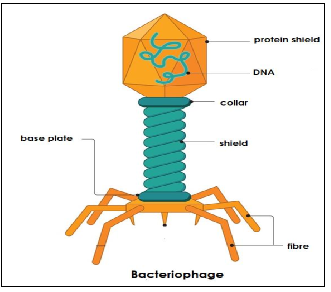
A bacteriophage, or simply a phage, is a virus that infects bacteria. Unlike other viruses that infect humans or animals, bacteriophages specifically target bacterial cells. They have a unique structure that allows them to attach to a bacterium, inject their genetic material (DNA), and take control of the bacterial machinery to produce more viruses. This eventually leads to the destruction of the bacterial cell, releasing new bacteriophages that can go on to infect other bacteria.
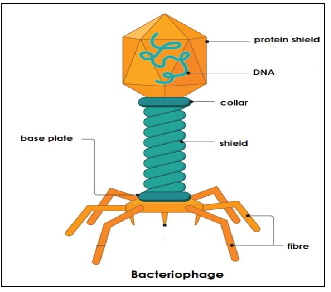
Protein Shield
The protein shield, also known as the capsid, is a protective covering that surrounds the genetic material of the bacteriophage. It is made up of protein molecules that fit together in a structured way, forming a strong outer shell. This shield has two main functions: it protects the viral DNA from damage, and it ensures the DNA is safely delivered into the host bacterium during infection. Without this shield, the viral DNA could be destroyed by environmental factors before it reaches its target.
DNA
DNA (Deoxyribonucleic Acid) is the genetic material of a bacteriophage. It carries the instructions needed to take control of a bacterial cell and produce new virus particles. The DNA is stored inside the capsid (protein shield) until the bacteriophage finds a suitable host. Once attached to a bacterial cell, the virus injects its DNA into the host, where it hijacks the bacterial machinery to replicate and assemble new bacteriophages. This process continues until the bacterial cell bursts, releasing more viruses to infect other bacteria.
Collar
The collar is a ring-like structure found in some bacteriophages, positioned between the capsid and the tail. Its main function is to provide stability by keeping these two parts firmly connected. In some cases, the collar may also help guide the DNA as it moves from the capsid, through the tail, and into the bacterial cell. By reinforcing the structure of the virus, the collar ensures that the infection process happens smoothly and efficiently.
Shield
The term shield can refer to any protective structure in the bacteriophage, but it mainly refers to the capsid. This shield plays a crucial role in keeping the virus’s genetic material safe until the right conditions for infection are met. It ensures that the DNA is not damaged by external factors such as enzymes, radiation, or changes in temperature before the bacteriophage finds a bacterial host.
Baseplate
The baseplate is an essential component of the bacteriophage’s tail, located at the very end of the tail structure. It functions like a docking station, allowing the virus to attach securely to the surface of a bacterial cell. Once the bacteriophage is attached, the baseplate plays a key role in triggering the injection of viral DNA into the host cell. It undergoes structural changes that help push the DNA from the capsid through the tail and into the bacterium.
Fibre
The fibres are long, thread-like extensions that project from the baseplate. These tail fibres act like sensors, helping the bacteriophage detect and recognize its specific bacterial host. When the fibres find the right type of bacterium, they attach to special receptors on the bacterial surface. This ensures that the bacteriophage does not waste its DNA on the wrong target. Once attached, the fibres help the bacteriophage hold onto the bacterium while the baseplate prepares to inject the viral DNA.
Bacteria
What are Bacteria?
Bacteria are microscopic, unicellular organisms classified under the kingdom Monera. They are prokaryotic, (do not contain membrane-bound organelles such as a nucleus, chloroplasts or mitochondria). Instead, their genetic material (DNA or RNA) is found in a region called the nucleoid. Bacteria are found in nearly every environment on Earth, from soil and water to inside the human body. Some bacteria are pathogenic, causing diseases such as tuberculosis, while most are beneficial and play essential roles in decomposition, digestion, and nutrient cycling.
Structure and Characteristics of Bacteria
Cell Wall and Plasma Membrane
Bacteria are enclosed by a cell wall, which provides structural support and protection. This rigid structure helps bacteria maintain their shape and prevents them from bursting in different environments. Inside the cell wall, a plasma membrane surrounds the cytoplasm. The plasma membrane regulates the movement of substances in and out of the cell, ensuring that the bacterial cell maintains its internal balance.
Slime Layer or Capsule
In some bacteria, the cell wall is surrounded by an additional protective layer known as a slime layer or capsule. This layer helps bacteria stick to surfaces, resist drying out, and avoid being destroyed by the host’s immune system. The capsule is well-organized and provides extra protection, making bacteria more resistant to harsh environments. This is particularly important for disease-causing bacteria, which use their capsules to evade the immune system and infect the host more effectively.
Genetic Material and Nucleoid
Unlike eukaryotic cells, bacteria do not have a true nucleus. Instead, their genetic material (DNA) is concentrated in a region called the nucleoid. This free-floating DNA carries all the instructions for bacterial growth, metabolism, and reproduction. Additionally, some bacteria contain plasmids, which are small circular DNA molecules that provide extra genetic traits, such as antibiotic resistance. These plasmids can be transferred between bacteria, allowing them to quickly adapt to new environments.
Movement: Flagella
Structure of a Bacterial Cell
The structure of a bacterial cell is simple yet highly efficient, enabling these microorganisms to survive and thrive in a variety of environments. Despite lacking the complexity of eukaryotic cells, bacterial cells possess key components that are crucial for their survival, growth, and reproduction.
Cell Wall
The cell wall is a rigid layer that surrounds the bacterial cell, providing structural support and protection. It is primarily composed of polysaccharides, such as peptidoglycan, which gives it strength and rigidity. The cell wall protects the bacteria from environmental stresses, such as changes in osmotic pressure, and helps maintain the shape of the cell. In addition, the cell wall acts as a barrier that prevents harmful substances from entering the cell. The composition of the cell wall can vary between bacterial species, influencing the bacteria’s classification into Gram-positive or Gram-negative groups.
Plasma Membrane
The plasma membrane is a semi-permeable barrier that encloses the cytoplasm and regulates the movement of substances in and out of the bacterial cell. It is made up of a phospholipid bilayer, which helps maintain the cell’s internal environment. The plasma membrane is crucial for controlling the uptake of nutrients, the removal of waste products, and maintaining the balance of ions and water within the cell. It also contains specialized proteins that are involved in processes such as energy production and transport.
Nucleoid
The nucleoid is the region within the bacterial cell where the DNA is stored. Unlike eukaryotic cells, bacteria lack a true nucleus; instead, their genetic material is concentrated in the nucleoid, a non-membrane-bound region. The bacterial DNA is typically a single circular chromosome, containing all the necessary instructions for the cell’s functions, such as growth, metabolism, and reproduction. The absence of a nucleus allows bacteria to replicate and respond to environmental changes more quickly than eukaryotic cells.
Plasmid
In addition to the main chromosome, bacteria often contain small, circular DNA molecules called plasmids. Plasmids are found in the cytoplasm and can carry extra genes that are not essential for the basic life functions of the bacteria but can provide advantages in certain conditions. For example, plasmids may carry genes that confer antibiotic resistance, allowing the bacteria to survive in the presence of antibiotics. Plasmids can be exchanged between bacteria, facilitating the spread of traits such as antibiotic resistance among bacterial populations.
Slime Capsule
The slime capsule is an additional outer layer found in some bacteria. It serves several important functions, including protecting the bacteria from desiccation (drying out), enhancing its ability to adhere to surfaces, and protecting the bacteria from the host’s immune system. The capsule is typically made of polysaccharides and helps the bacteria form biofilms—communities of bacteria that stick together on surfaces such as teeth, medical devices, or tissues. The capsule can also make it more difficult for white blood cells to engulf and destroy the bacteria, contributing to the pathogenicity of certain bacteria.
Flagellum
The flagellum is a whip-like structure that allows bacteria to move in liquid environments. It rotates like a propeller, enabling the bacteria to move toward or away from specific stimuli in their environment, such as nutrients or toxins. The ability to move is crucial for bacteria to find favorable conditions, such as nutrient-rich environments, or to escape unfavorable conditions, such as toxic substances. Some bacteria have one or a few flagella, while others may have many, arranged in different ways to facilitate movement. Flagella are also used by certain bacteria to swim through viscous environments, such as the mucus in the human respiratory or digestive systems.
Shapes of Bacteria
Bacteria are classified into different types based on their shape, and these shapes play an important role in their function and movement.
Rod-Shaped Bacteria: Bacillus
Rod-shaped bacteria, known as bacillus, have a cylindrical structure that provides them with a larger surface area compared to other shapes. This increased surface area is beneficial because it allows these bacteria to absorb nutrients more efficiently from their environment. The ability to take in nutrients effectively is essential for their growth and survival. Additionally, the shape of bacillus bacteria aids in their efficiency in reproduction. By having a larger surface area, these bacteria can replicate more rapidly through processes like binary fission, leading to the quick growth of bacterial populations. The rod shape also helps these bacteria move through their environment, enabling them to find new sources of nutrients.
Spherical Bacteria
Spherical bacteria, known as coccus, have a round shape. This shape helps them resist environmental stress, and they are often found in clusters or chains, depending on how they divide. The spherical shape provides structural stability and is effective for bacteria that need to form dense groups, such as in biofilm formation.
Spiral-shaped Bacteria
Spiral-shaped bacteria, called spirillum, have a helical or corkscrew-like shape. This unique shape enables them to move through viscous liquids or surfaces, making it easier to navigate environments like the digestive tract or water. The spiral shape is often associated with bacteria that can cause infections in humans or animals.
Comma-shaped Bacteria
The comma-shaped bacteria are referred to as vibrio. This shape allows the bacteria to have a flexible movement, and it aids in their ability to swim through liquids. Vibrio bacteria are often found in aquatic environments and can sometimes be associated with waterborne diseases.
Reproduction: Binary Fission
Bacteria reproduce asexually through a process called binary fission, which is a simple but highly efficient method of cell division. Unlike sexual reproduction, where genetic material is exchanged between two individuals, binary fission allows a single bacterial cell to produce two genetically identical daughter cells. This process enables bacteria to multiply rapidly, which is particularly beneficial in environments where resources are abundant.
The process of binary fission begins with the replication of the bacterial DNA. The bacterium’s single, circular chromosome is copied, and the two copies move toward opposite ends of the cell. At the same time, the cell membrane and cell wall begin to grow inward, dividing the cell into two halves. This process of cytokinesis results in the formation of two daughter cells, each with an exact copy of the original DNA. These daughter cells are clones of the parent cell, meaning they have the same genetic material.
Binary fission is a form of asexual reproduction, meaning there is no exchange of genetic material between different organisms. This allows bacterial populations to grow exponentially under favorable conditions. In fact, in the right environment with sufficient nutrients and favorable temperatures, some bacteria can divide as quickly as every 20 minutes, leading to the rapid increase in bacterial numbers. This ability to reproduce quickly is one reason why bacteria can spread and adapt so effectively, making them both important in ecosystems and sometimes harmful as pathogens.
Although the process is asexual, it is important to note that genetic variation can still occur in bacteria through processes like mutations, which can arise during DNA replication. Additionally, bacteria can exchange genetic material through other mechanisms, such as conjugation, transformation, and transduction, leading to genetic diversity within a bacterial population.
Binary fission is an efficient way for bacteria to reproduce, but it also means that bacterial populations can increase very quickly, sometimes leading to the rapid spread of bacterial infections in living organisms. The ability of bacteria to reproduce so rapidly highlights their importance in the study of microbiology, especially in understanding antibiotic resistance and the spread of diseases.
Protista:
Protists are a diverse group of eukaryotic organisms, meaning they possess a true nucleus that houses their genetic material. They can be either unicellular or multicellular, with unicellular organisms like Amoeba being typical, and multicellular organisms such as algae also classified as protists. Protists are considered one of the earliest forms of eukaryotic life on Earth. They are a kingdom of organisms that don’t neatly fit into the categories of plants, animals, or fungi, and are classified based on various characteristics, such as their mode of nutrition and locomotion.
Autotrophic and Heterotrophic Protists
Protists exhibit various methods of obtaining nutrition. Some, such as algae, are autotrophic, meaning they make their own food through photosynthesis. They contain chloroplasts, specialized organelles that allow them to capture light energy and convert it into chemical energy. This makes algae an essential group of organisms in ecosystems, as they serve as primary producers in aquatic environments, forming the base of food webs by providing energy for other organisms.
On the other hand, some protists, such as Amoeba, are heterotrophic. These organisms rely on consuming other organisms or organic matter for food. Amoeba, for example, engulfs its food through a process called phagocytosis, where the cell extends pseudopodia (temporary projections of the cytoplasm) around a food particle and forms a food vacuole. Other heterotrophic protists may feed on bacteria, smaller protists, or decaying organic material.
Locomotion in Protists
Protists use different types of locomotory structures to move within their environment. Amoeba move using pseudopodia, which are extensions of the cell membrane and cytoplasm. The amoeba extends part of its body to move forward, then the rest of the cell follows. This allows the organism to change shape and move in a sluggish, crawling motion.
Another example is the Paramecium, a ciliate protist. Paramecium moves using cilia, small hair-like structures that cover the surface of the cell. These cilia beat in a coordinated fashion, allowing the organism to move in a rapid, swimming motion through water. The cilia also help capture food particles, which the paramecium sweeps into its oral groove for ingestion.
The Euglena, a flagellate protist, moves using a flagellum. A flagellum is a long, whip-like structure that rotates, propelling the organism forward in a smooth, swimming motion. The flagellum enables Euglena to move towards light (a behavior called phototaxis) in order to perform photosynthesis.
Reproduction in Protists
Protists can reproduce in several ways, with asexual reproduction being the most common. The most frequent method is binary fission, where a single cell divides into two genetically identical daughter cells. This allows protists to reproduce rapidly, especially when environmental conditions are favorable.
While binary fission is predominant, some protists also reproduce sexually, especially certain types of algae. In sexual reproduction, genetic material from two different protists is combined, producing offspring with genetic variation. This typically involves the formation of specialized reproductive cells, such as gametes, which fuse during fertilization to create a zygote. Sexual reproduction allows for greater genetic diversity, which can be important for adapting to changing environments.
Nutrition: Autotrophic and Heterotrophic Bacteria
Bacteria obtain energy in different ways. Some bacteria are autotrophic, meaning they can produce their own food through photosynthesis or chemical processes. However, most bacteria are heterotrophic, meaning they consume organic matter from their environment. These bacteria play an important role in ecosystems by breaking down dead organisms and recycling nutrients.
Religion Studies Grade 11 Notes | Study Guide
Protists
Introduction to Protists
The Kingdom Protista is a diverse group of eukaryotic organisms that do not belong to the plant, animal, or fungi kingdoms. Protists are unicellular or multicellular and exhibit a variety of modes of nutrition, reproduction, and movement. They are considered one of the most diverse groups of organisms, as they share characteristics with multiple biological kingdoms but do not fit neatly into any of them.
Protists play essential roles in various ecosystems, contributing to oxygen production, decomposition, and serving as a food source for many organisms. Some protists, such as Plasmodium, can also act as parasites, causing diseases in humans and animals.
General Characteristics of Protists
Protists, though diverse, share several defining characteristics that help classify them within the broader group of eukaryotes.
Aquatic Habitat
The majority of protists are found in aquatic habitats, including freshwater, marine environments, and moist terrestrial areas. Some protists are free-living, while others are parasitic, living inside host organisms. Their reliance on water for survival is essential, as they typically require a moist environment to maintain cellular processes.
Simple Body Structure
Protists have a relatively simple body structure. They lack true tissues and organs, which sets them apart from more complex multicellular organisms. Even multicellular protists do not form specialized tissues, classifying them as thallophytes—organisms that have undifferentiated body structures. This simplicity allows protists to adapt to a variety of environments, but also limits their structural complexity.
Different Modes of Nutrition
Protists display a range of nutritional modes, which are essential for their survival:
- Autotrophic: Some protists, like algae and diatoms, produce their own food through photosynthesis. These protists contain chlorophyll and are capable of converting light energy into chemical energy, much like plants.
- Heterotrophic: Many protists obtain nutrients by ingesting other organisms or organic matter. Examples include Amoeba and Paramecium, which feed on microorganisms or organic debris.
- Mixotrophic: Certain protists, like Euglena, are capable of switching between autotrophic and heterotrophic modes of nutrition depending on the availability of sunlight or organic matter. This adaptability helps them survive in varying environmental conditions.
Locomotion
Protists exhibit different mechanisms of movement, which are key to their survival and feeding:
- Flagella: Some protists, like Euglena, use flagella, which are long, whip-like tails that propel them through water.
- Cilia: Protists such as Paramecium are covered in cilia—tiny, hair-like structures that beat rhythmically to move the organism and assist in food intake by creating water currents.
- Pseudopodia: Protists like Amoeba move using pseudopodia, temporary cytoplasmic extensions that help in both locomotion and engulfing food through a process called phagocytosis.
Reproduction
Protists have various methods of reproduction:
- Asexual Reproduction: Most protists reproduce asexually, commonly through binary fission, where a single cell divides into two identical daughter cells. This form of reproduction allows for rapid population growth in favorable conditions.
- Sexual Reproduction: Some protists engage in sexual reproduction, often through conjugation, where two protists exchange genetic material. Others reproduce using spores, which can survive harsh conditions and later germinate when the environment becomes suitable for growth.
Classification of Protists
1. Protozoa – Animal-Like Protists
Protozoa are unicellular, heterotrophic protists, meaning they cannot produce their own food and must consume other organisms for energy. They are called “animal-like” because they share similarities with animals in feeding habits and movement. Most protozoa live in freshwater, marine environments, or as parasites inside host organisms.
Examples of Protozoa
- Amoeba – Amoebas move and feed using pseudopodia, which are temporary extensions of their cytoplasm. When an Amoeba encounters food, it extends its pseudopodia around the particle and engulfs it in a process called phagocytosis. This is similar to how white blood cells in the human body engulf harmful bacteria to protect against infections.
- Paramecium – Paramecia are covered in tiny hair-like structures called cilia, which they use for movement and feeding. These cilia create water currents that direct food particles into the oral groove, where they are digested. Imagine tiny oars on a boat, helping it move and collect food.
- Plasmodium – Unlike other protozoa, Plasmodium does not move freely. It is a parasitic protozoan that causes malaria in humans. It has a complex life cycle, requiring both mosquitoes and humans to complete its reproduction. Plasmodium is an example of how some protists can have significant impacts on human health.
2. Algae – Plant-Like Protists
Algae are autotrophic protists, meaning they produce their own food through photosynthesis, just like plants. Some algae are unicellular, while others form multicellular colonies that resemble seaweed. Algae contain chlorophyll, the pigment that allows them to capture sunlight and generate energy.
Examples of Algae
- Green Algae – These algae contain chloroplasts filled with chlorophyll, giving them their characteristic green color. They are commonly found in freshwater environments and sometimes form colonies, such as Volvox, which is a hollow sphere of cells that work together. Green algae serve as an important food source for many aquatic organisms.
- Diatoms – Diatoms are unicellular algae with silica-based cell walls, giving them a glass-like appearance. They play a crucial role in marine ecosystems by producing oxygen and absorbing carbon dioxide. When they die, their silica shells settle at the ocean floor, contributing to sedimentary deposits.
- Euglena – Euglena is unique because it can switch between autotrophic and heterotrophic nutrition. When exposed to sunlight, it performs photosynthesis, but in dark conditions, it can consume food particles instead. This ability makes Euglena highly adaptable to different environments.
3. Slime and Water Moulds – Fungus-Like Protists
Slime and water moulds are heterotrophic protists that resemble fungi in their appearance and feeding habits. They decompose organic material and help recycle nutrients in ecosystems.
Examples of Fungus-Like Protists
- Slime Moulds – These organisms thrive in damp environments, such as forest floors, where they feed on decaying plant material. During their life cycle, slime moulds can form large, slimy networks that absorb nutrients, displaying a primitive form of cooperation between cells.
- Water Moulds – Unlike true fungi, water moulds live in water or moist environments. Some species, such as Phytophthora infestans, cause serious plant diseases, including potato blight, which led to the Irish Potato Famine. This highlights how certain protists can have devastating effects on agriculture and food production.
Nutrition in Protists
Protists display a wide range of feeding strategies, reflecting their diversity:
- Algae are autotrophic, meaning they create their own food through photosynthesis using sunlight, carbon dioxide, and water.
- Protozoa and slime moulds are heterotrophic, relying on other organisms for food.
- Some, like Euglena, can switch between autotrophic and heterotrophic nutrition, depending on environmental conditions.
For example, an Amoeba engulfs food using pseudopodia, while a Paramecium uses cilia to sweep food into its oral groove. These differences highlight the adaptability of protists in various environments.
Reproduction in Protists
Most protists reproduce asexually through binary fission, where a single cell divides into two identical daughter cells. This allows for rapid population growth, especially in favorable conditions.
Some protists, such as Spirogyra (a type of green algae), reproduce sexually through conjugation, where two cells exchange genetic material. This process introduces genetic diversity, making populations more resilient to environmental changes.
Habitats of Protists
Protists are mainly aquatic organisms, thriving in freshwater, marine, and damp environments. Examples include:
- Diatoms, which live in oceans and lakes and form part of plankton, the base of many aquatic food chains.
- Amoebas, commonly found in ponds, where they feed on bacteria and other small organisms.
- Plasmodium, which lives inside human blood cells and is transmitted by mosquitoes.
Protists’ ability to adapt to various environments demonstrates their ecological importance and resilience.
Structure of Protists
Protists are a diverse group of eukaryotic microorganisms that exhibit a range of structural features. While they lack the complex body organization seen in multicellular organisms, protists have specialized structures that allow them to carry out essential functions such as movement, feeding, and reproduction. These structures vary depending on the type of protist, with key examples including chloroplasts, locomotory structures, and cell walls.
Chloroplasts
Autotrophic protists, such as algae, contain chloroplasts, which are organelles that allow them to perform photosynthesis. Chloroplasts capture light energy and use it to convert carbon dioxide and water into glucose, providing the protist with the necessary energy to survive. The presence of chloroplasts is a defining feature of autotrophic protists, as they rely on light energy to produce food, much like plants.
Locomotory Structures
Protists use various specialized structures for movement and feeding. These structures enable them to move toward favorable conditions or search for food. The three main types of locomotory structures in protists are pseudopodia, cilia, and flagella.
- Pseudopodia
Found in protists like Amoeba, pseudopodia are temporary, arm-like extensions of the cell that help with movement and feeding. The protist extends a portion of its cytoplasm to form the pseudopodium, which then pulls the rest of the cell toward it. This process, known as amoeboid movement, allows the organism to move slowly in response to its environment. Pseudopodia also play a key role in phagocytosis, the process of engulfing food particles. - Cilia
Cilia are short, hair-like projections found on the surface of protists such as Paramecium. These structures beat in coordinated rhythms, creating a current that propels the protist through water. Cilia also help in feeding by sweeping food particles toward the organism’s mouth. Cilia are particularly useful for protists living in aquatic environments where they need to move efficiently through water. - Flagella
Flagella are long, whip-like structures that enable movement in protists like Euglena. By rotating or undulating, flagella propel the protist through water in a swimming motion. Many flagellates have one or more flagella, and their movement is often more rapid than that of protists with cilia or pseudopodia. Flagella also help some protists sense their environment and find optimal conditions for growth.
Cell Walls
Cell walls provide structural support to protists and protect them from their environment. The composition of the cell wall varies between different groups of protists, depending on their ecological niche and lifestyle.
- Green Algae
Green algae, which are closely related to plants, have cellulose-based cell walls. This structure provides rigidity and helps maintain the shape of the cell. The cellulose cell wall is similar to the one found in land plants, highlighting the evolutionary relationship between green algae and plants. - Diatoms
Diatoms are a group of protists with distinctive silica-based cell walls. These cell walls, made of silicon dioxide, have a glass-like appearance and are intricately patterned. The silica walls provide protection and support, and they also help diatoms float in water by increasing their buoyancy.