Life Sciences Grade 11 Exam Revision: Past Paper Questions & Answers 3
Life Sciences Grade 11
Various options are given as possible answers to the following questions. Choose the answer.
Question: Which chemical is a product of photosynthesis that moves out of a green leaf through its stomata?
A, Carbon dioxide
B, Glucose
C, Oxygen
D, Water
The correct answer is: C
Oxygen is formed during photosynthesis as a gas and leaves the leaf through the stomata, which are small openings on the leaf surface.
Question: The products of protein digestion are:
A, amino acids
B, fatty acids
C, glycerol
D, simple sugars
The correct answer is: A
Proteins are broken down into amino acids, which are small enough to be absorbed into the bloodstream for use by the body.
Question: Where in a cell does cellular respiration take place?
A, Nucleus
B, Mitochondria
C, Chloroplasts
D, All cell membranes
The correct answer is: B
Most energy in the form of ATP is produced inside the mitochondria, making them the main site of cellular respiration.
Question: The process that occurs in the capsules of some plants to form spores is:
A, Mitosis
B, Binary fission
C, Meiosis
D, Fertilisation
The correct answer is: C
Meiosis produces haploid spores by reducing the chromosome number, allowing these spores to take part in the plant’s reproductive cycle.
Question: A closed blood system is found in:
A, Annelida
B, Insecta
C, Cnidaria
D, Porifera
The correct answer is: A
Annelids such as earthworms have a closed circulatory system where blood remains inside blood vessels at all times.
Question: Which animal activity is not beneficial to farmers?
A, Soil organisms preying on crop pests
B, Dogs herding sheep
C, Swallows feeding on insect larvae
D, Mice feeding on wheat in storerooms
The correct answer is: D
Mice cause loss and contamination of stored grain, which makes their activity harmful rather than useful to farmers.
Question: The experiment below investigates respiration in yeast.
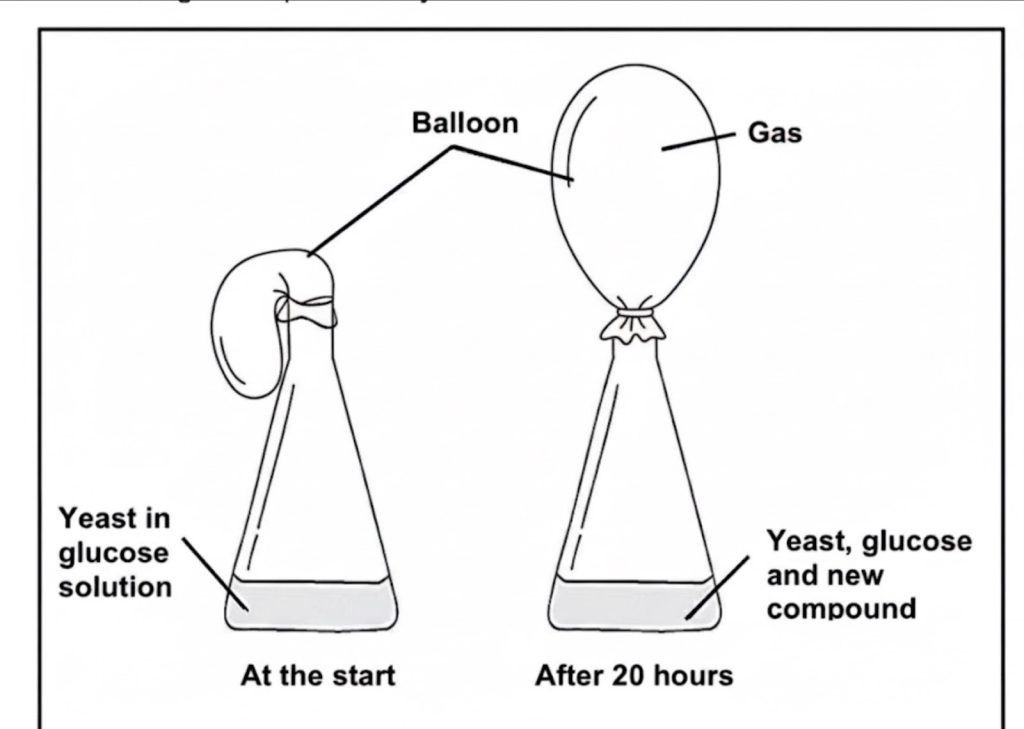
Which row in the table correctly describes the contents of the flask after 20 hours?
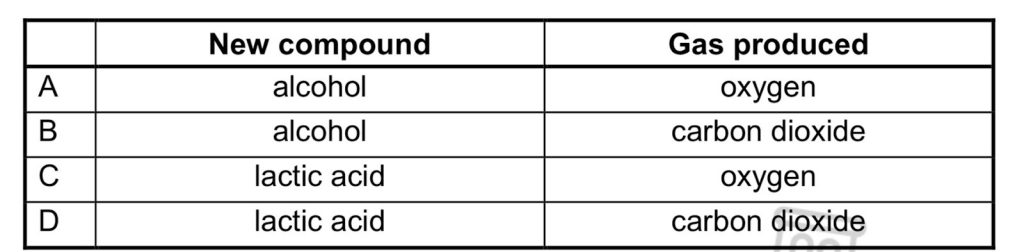
The correct answer is: B
In anaerobic respiration, yeast converts glucose to alcohol and releases carbon dioxide, causing the balloon to expand.
Question: The graph below shows the results of three experiments to measure the rate of photosynthesis under different conditions.
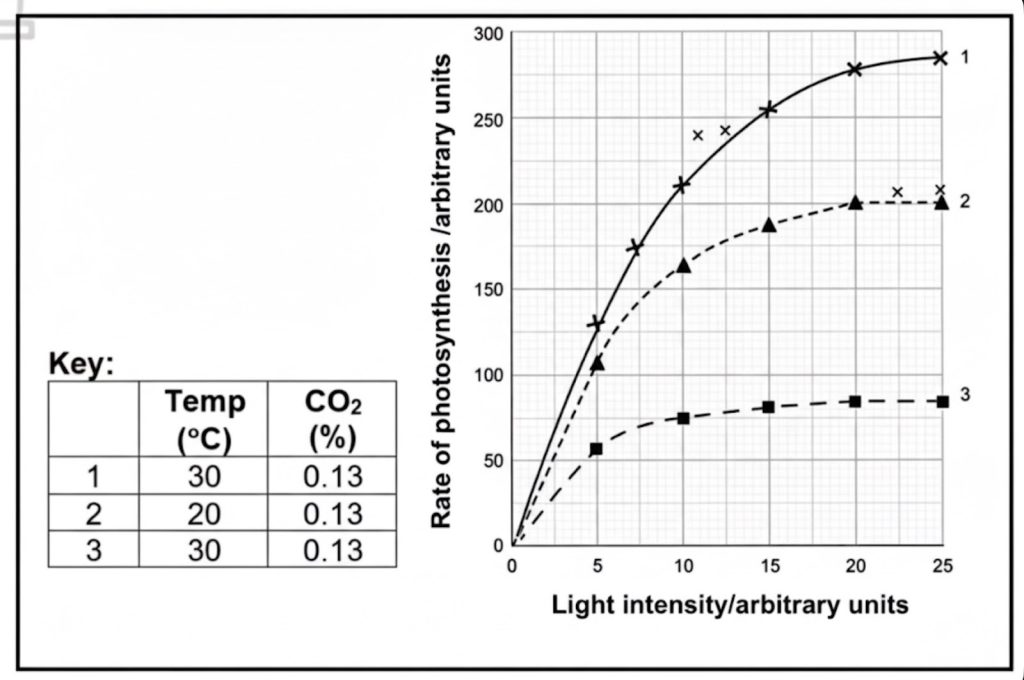
Experiment 1 measured the effect of light intensity on photosynthesis
Experiment 2 measured the effect of temperature on photosynthesis
Experiment 3 measured the effect of carbon dioxide on pho
Which row in the following table correctly identifies the limiting factor for photosynthesis in each experiment?
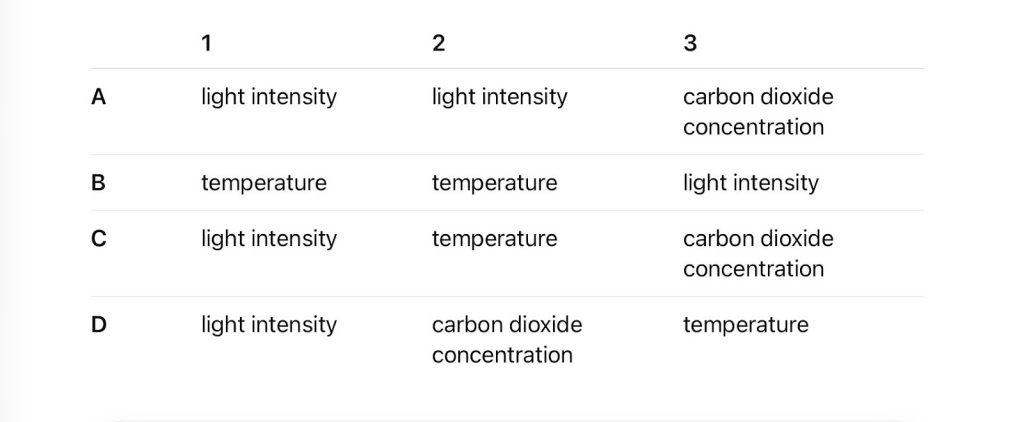
The correct answer is C
The limiting factors for the rate of photosynthesis are identified by observing where the graph begins to level off, showing that light intensity is no longer limiting. In Experiment 2, the rate reaches a lower maximum than in Experiment 1 because the temperature is set at 20°C, so temperature is the limiting factor. In Experiment 3, which corresponds to Option C, the rate reaches the lowest maximum of all the experiments. This happens because the carbon dioxide concentration is kept very low, and the shortage of CO₂ prevents the photosynthesis rate from rising any further. Therefore, for Option C, carbon dioxide concentration becomes the limiting factor.
Question: The chemical reagent used to test for the presence of starch
A. Bromothymol blue
B. Iodine solution
C. Lime water
D. Methylated spirits
The Correct Answer is: B. Iodine solution
Iodine solution changes from brown to blue-black when starch is present. This colour change makes it the standard test for detecting starch.
Question: The process that takes place in leaves and uses carbon dioxide
A. Cellular respiration
B. Combustion
C. Photosynthesis
D. Transpiration
The Correct Answer is: C. Photosynthesis
Photosynthesis uses carbon dioxide, water, and sunlight to produce glucose and oxygen. This process occurs mainly in the chloroplasts of leaf cells.
Question: A factor that increases the rate of photosynthesis
A. Low light intensity
B. Low temperature
C. Low carbon dioxide concentration
D. High light intensity
The Correct Answer is: D. High light intensity
More light provides more energy for the reactions of photosynthesis, increasing the rate until another factor limits the process.
The apparatus shown was used in an experiment. The carbon dioxide content of the water in each test-tube was measured at the start of the experiment and again three hours later.
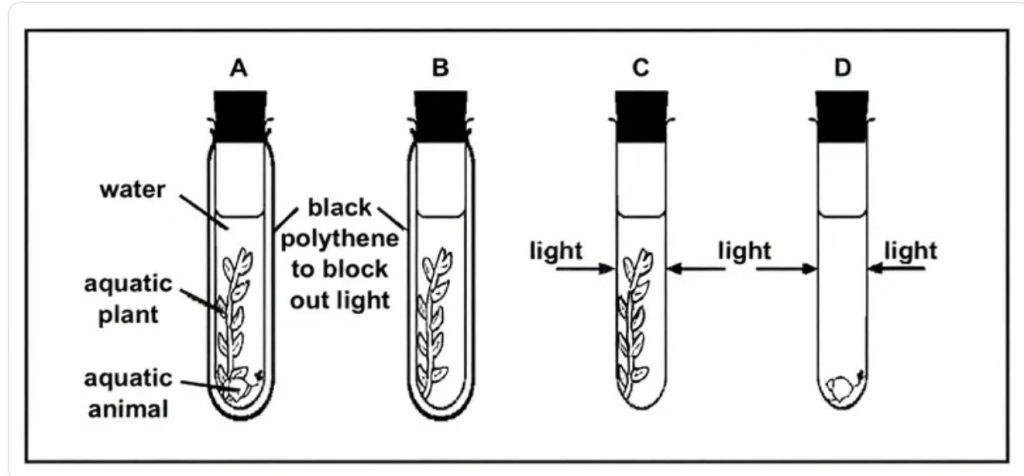
Question: In which test-tube will the carbon dioxide concentration decrease?
The correct answer is C.
The carbon dioxide concentration will decrease in test-tube C. This is because test-tube C contains both an aquatic plant and an animal exposed to light. In the presence of light, the plant carries out photosynthesis, a process that actively uses carbon dioxide from the water. Although both the plant and the animal also respire and release some CO₂, the plant’s rate of CO₂ uptake during photosynthesis is greater than the total CO₂ released through respiration. As a result, there is a net reduction in carbon dioxide in test-tube C.
In the other tubes, carbon dioxide does not decrease because either only respiration occurs (test-tube B and test-tube D) or the conditions do not favour enough photosynthesis to lower CO₂ levels.
Give the correct biological term for each of the following descriptions.
Question: A symbiotic relationship where both organisms benefit
The Correct Answer is Mutualism
Mutualism is a form of symbiotic relationship where two different species interact in a way that is beneficial to both of them.
Question: Reproduction which uses non-reproductive parts of a plant to produce new plants
The correct answer is Asexual or Vegetative reproduction
Vegetative reproduction is a form of asexual reproduction where a new plant grows from a part of the parent plant, such as a stem, leaf, or root, without the involvement of seeds or spores.
Question: The collective name for a filament and an anther
The Correct Answer is Stamen or Androecium
The stamen is the male reproductive organ of a flower, composed of the filament (the stalk) and the anther (the structure that produces pollen).
Question: Organic component of soil, formed by the decomposition of leaves and other plant material by soil microorganisms
The Correct Answer is Humus
Humus is the stable, dark, organic material that remains in the soil after the extensive decomposition of plant and animal residues by decomposers like bacteria and fungi.
Question: The type of animal that does not have a backbone.
The correct answer is Invertebrate
An invertebrate is an animal that lacks a vertebral column or backbone, contrasting with vertebrates (fish, amphibians, reptiles, birds, and mammals).
Question: Tissue that transports water in plants
The Correct Answer is Xylem
Xylem is one of the two types of transport tissue in vascular plants, responsible for transporting water and dissolved minerals from the roots up to the rest of the plant.
Question: An underground stem in ferns
The Correct Answer is Rhizome
A rhizome is a modified, horizontal, underground stem found in certain plants like ferns, which functions in both vegetative (asexual) reproduction and storage of starches and proteins.
Question: The incorporation of absorbed nutrients into the cells of the body
Correct Answer is Assimilation
Assimilation is the process where digested and absorbed food molecules are converted into new compounds (like proteins, carbohydrates, and fats) and incorporated into the cells of the body for use in growth, repair, or storage.
Question: The process of producing ATP without oxygen
The Correct Answer is Anaerobic respiration
Anaerobic respiration is a form of cellular respiration that occurs in the absence of oxygen, resulting in the production of a small amount of ATP (energy) and byproducts like lactic acid or alcohol.
These diagrams show various organisms from the animal kingdom
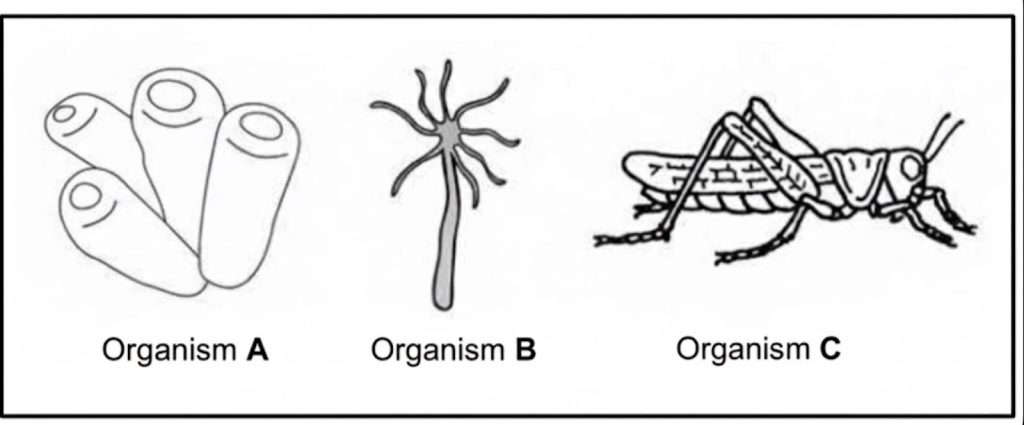
Question: Give the letter of an organism that…
(a) has a haemocoel.
The correct letter is C
A haemocoel is characteristic of animals with an open circulatory system. This feature is present in Arthropods (Organism C).
(b) is sessile.
The correct letter is C
Sessile organisms remain fixed in one position. Porifera (Organism A) and the polyp form of Cnidaria (Organism B), such as Hydra, are typically non-motile.
(c) has a mesoderm.
Animals with a mesoderm are triploblastic. Arthropods (Organism C) possess a mesoderm, while Porifera (A) and Cnidaria (B) do not.
Study the graph below and answer the question
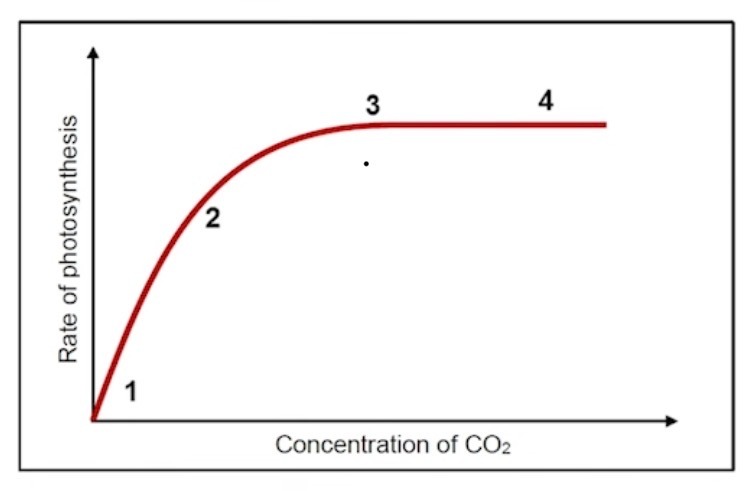
Question: Between which points on the graph is the rate of photosynthesis increasing the fastest?
A. 1 and 2
B. 2 and 3
C. 1 and 3
D. 3 and 4
The Correct Answer is: A. 1 and 2
Between points 1 and 2 the curve rises steeply, showing the fastest increase in the rate of photosynthesis as carbon dioxide concentration begins to rise.
Study the diagram and answe the questions that follow
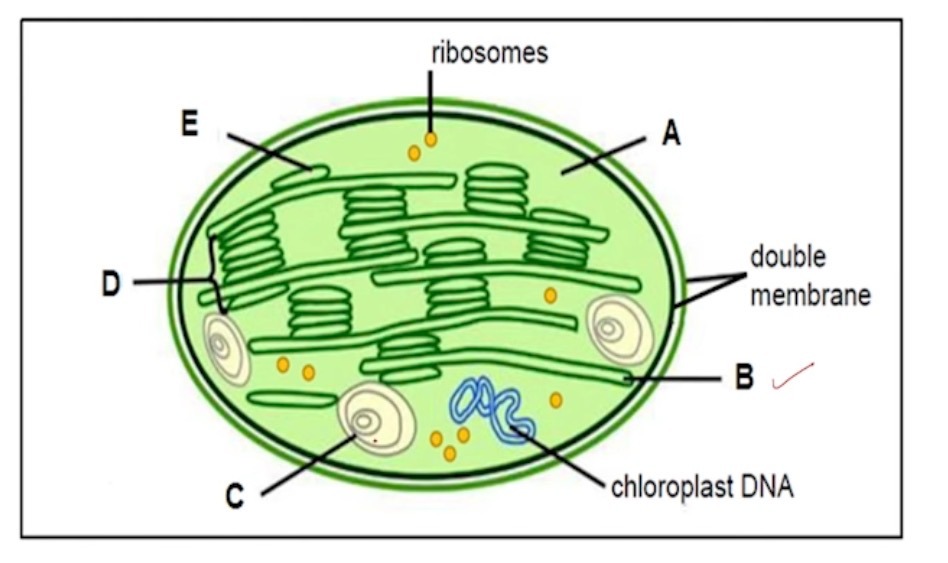
Question: Name the organelle shown in the diagram.
The Correct Answer is: Chloroplast, the organelle where photosynthesis occur
Question: Provide names for labels A to E.
Label A, is the Stroma
The stroma is the fluid-filled space inside the chloroplast where the light-independent reactions (Calvin cycle) take place.
Label B, is Lamella ( or Stromal Lamella)
Lamellae act as bridges that connect the grana, keeping the thylakoid stacks in position and helping maintain internal structure.
Label C, is the – Starch Granule
This is where the plant temporarily stores starch made during photosynthesis when glucose production is high.
Label D, is the– Granum (or Grana)
A granum is a stack of thylakoids. It is the main site for the light-dependent stage of photosynthesis, where chlorophyll absorbs light.
Label E, is the Thylakoids
Thylakoids are flattened membrane sacs containing chlorophyll and other pigments. They capture light energy for photosynthesis.
Question: What process takes place in this organelle?
The process taking place in this organelle is Photosynthesis The chloroplast performs photosynthesis, converting light energy into chemical energy stored in glucose.
Question: What is the function of C?
C, stores starch produced during photosynthesis.
Starch granules act as storage sites for carbohydrates. When the plant makes more glucose than it immediately needs, the excess is converted to starch and stored in these granules.
The diagram below represents the process of photosynthesis
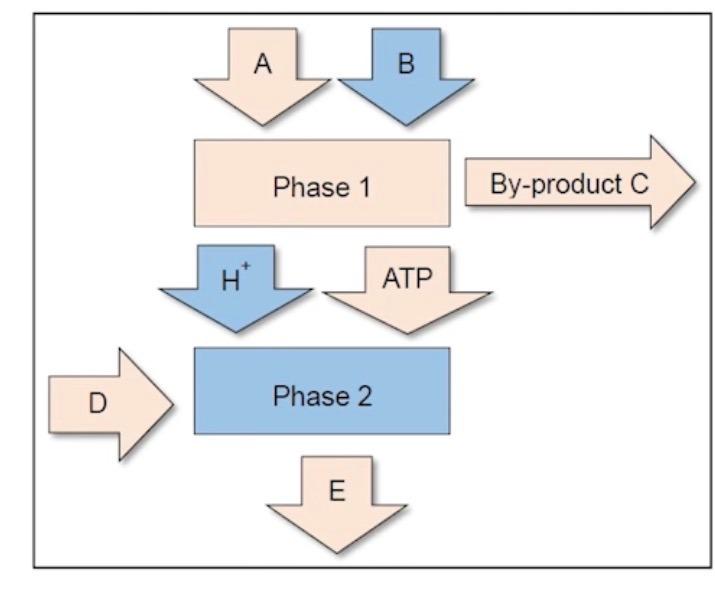
Question: Identify the phases label phase 1 and Phase 2
Phase 1 is known as the light phase, and it occurs when the plant absorbs sunlight. During this stage, light energy is captured by chlorophyll and used to split water molecules, releasing oxygen and producing energy-rich molecules needed later.
Phase 2 is called the dark phase or the Calvin Cycle. This phase does not require light directly. Instead, it uses carbon dioxide together with the energy made during the light phase to build glucose, the plant’s food.
Question: Provide the materials labelled A and B
The materials labelled A and B represent light and water, which are both essential for the light phase. Light provides the energy that chlorophyll needs to drive the reactions, while water is split to release hydrogen and oxygen. These two raw materials work together to power the early steps of photosynthesis and prepare the plant for glucose production in the next phase.
Question: Name the by product labelled as C.
The by-product labelled C is oxygen. Oxygen is produced when water molecules are split during the light phase. Since the plant does not need all this oxygen for its own processes, most of it is released into the atmosphere through tiny pores in the leaves called stomata. This oxygen is essential for supporting life on Earth.
Question: Which substance labelled as D is essential for phase 2
The substance labelled D is carbon dioxide. Carbon dioxide is required in Phase 2, where the plant uses it to build glucose molecules. In this stage, carbon atoms from carbon dioxide are combined using energy from Phase 1 to form the sugar needed for plant growth and energy.
Question: From where is the substance labelled as D obtained ?
Carbon dioxide (substance D) comes from the atmosphere. It enters the plant through small openings called stomata, which are mainly found on the underside of leaves. Once inside the leaf, the carbon dioxide moves into the chloroplasts where it is used in the dark phase to form glucose.
.
Question: Name the product E, that’s produced during phase 2
The product labelled E is glucose. This sugar is created during the dark phase when carbon dioxide is combined with hydrogen, using energy from the light phase. Glucose serves as the main source of chemical energy for the plant and is essential for growth, respiration, and storage
Question: In what form is E stored in plants ?
Glucose (Product E) is stored in plants in the form of starch. Since glucose is reactive and cannot be stored safely for long periods, plants convert it into starch, which is stable and can be kept in leaves, roots, stems, or seeds. When needed, the starch can be broken down again to release glucose for energy.
Read and answer the questions below
A tomato farmer was able to produce crops in a greenhouse which were heated to between 15 C and 22 C. In addition, the carbon dioxide level was increased from the normal 0.03% to 0.3%.
Question: State ways in which the farmer could have enriched the air inside the greenhouse with carbon dioxide without burning any fuel.
The farmer can use the following ways to enrich the air inside the greenhouse with carbon dioxide without burning any fuel
- The farmer could enrich the greenhouse by pumping carbon dioxide directly from storage tanks into the enclosed space. This method allows a steady and controlled release of CO₂ without using any fuel, ensuring the plants receive the right amount needed to boost photosynthesis.
- The farmer could also add sodium bicarbonate to the soil. When sodium bicarbonate reacts in the soil, it slowly releases carbon dioxide into the air, helping to increase the CO₂ concentration inside the greenhouse.
- Another effective method is adding organic material, such as compost or plant waste, to the soil. As these materials decompose naturally, they release carbon dioxide, creating a continuous and fuel-free source of CO₂ for the plants.
Question: Explain how increasing the carbon dioxide levels up to 0.1% can lead to an increased production of tomatoes.
When carbon dioxide levels are increased to 0.1%, the rate of photosynthesis rises because the plant has more of the raw material it needs to make food. With more CO₂ available, the plant can produce sugars such as glucose at a faster rate, giving it a greater supply of energy-rich molecules.
Question: Name the other factors which might have to be increased to obtain an even greater yield when the carbon dioxide level is increased to above 0.1%.
- Temperature may need to be increased because warmer conditions within the plant’s optimum range help enzymes work faster, allowing the plant to use the additional carbon dioxide more effectively. When temperature is controlled at the right level, the plant’s metabolic processes speed up, supporting faster growth and higher fruit production.
- Light intensity might also need to be increased because photosynthesis depends on light as its main energy source. Even if carbon dioxide levels are high, the plant cannot produce more food unless it receives enough light to power the reactions. Increasing light intensity gives the plant the extra energy it needs to maximise the benefits of the higher CO₂ levels.
Question: Predict what would happen if the carbon dioxide concentration within the greenhouse is increased to 0.5% for between 10 to 15 days if all other factors are kept constant.
If the carbon dioxide concentration is increased to 0.5%, the plants will show a rapid rise in photosynthesis during the first several days because CO₂ is no longer a limiting factor. This initial boost allows the plants to produce more glucose and temporarily grow faster.
After about 10–15 days, the rate of photosynthesis will begin to slow down because other factors—such as light, temperature, water, or nutrients—will become limiting. Even though there is plenty of carbon dioxide, the plant cannot continue increasing its photosynthesis rate without more energy or resources.
Eventually, the photosynthesis rate may return to normal levels or even drop slightly if the extremely high CO₂ levels cause the stomata to partially close, which can reduce cooling, water movement, and nutrient uptake. Therefore, the benefit is only short-term unless other conditions are also adjustomato farmer was able to produce crops in a greenhouse which were heated to between 15 degrees celcius and 22 degrees celcius In addit
Study the graph and Read the accompanying information to answer the questions below
Scientists set up an apparatus to investigate the effect of temperature, light intensity and carbon dioxide concentrations on plant growth. Using this apparatus, they could control each factor.
The scientists set different temperatures, carbon dioxide concentrations and light intensity for four different groups of lettuce plants.
Question: What is the influence of light intensity on the average mass of the lettuce plants
When light intensity increases, the rate of photosynthesis also rises because the plants receive more energy to drive the process. As photosynthesis becomes faster, the lettuce plants produce more glucose, which is used to build new cells and increase biomass. This results in the lettuce plants growing larger and gaining more mass, meaning that higher light intensity leads to a higher average mass of the plants.
Question: Name two limiting factors that influence the rate of photosynthesis as the light intensity increases.
- The two limiting factors are One limiting factor is carbon dioxide. Even if light intensity is high, photosynthesis cannot increase beyond a certain point if there is not enough carbon dioxide for the plant to convert into glucose. Low carbon dioxide levels will restrict the rate at which photosynthesis can occur.
- The second limiting factor is temperature. Photosynthetic enzymes work best within an optimal temperature range. If the temperature is too low or too high, enzyme activity slows down, and the rate of photosynthesis cannot increase further despite higher light intensity.
Study the diagram below and answer the questions that follow
Question: Supply labels for A to G
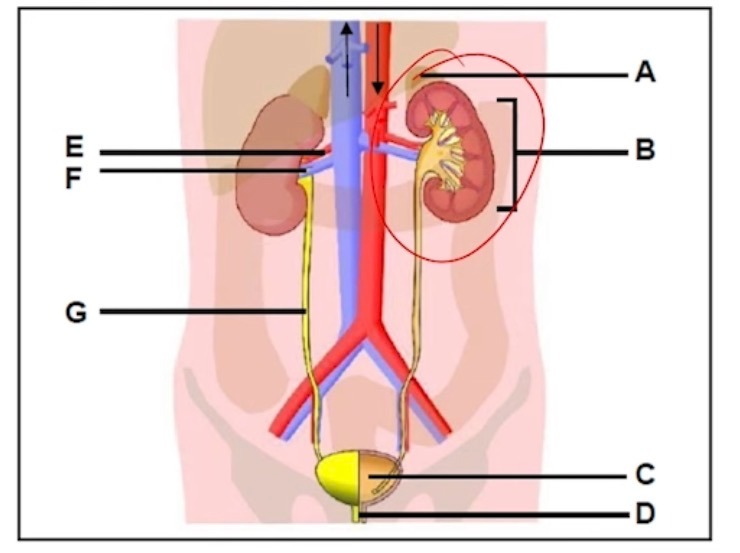
Question: Supply labels for A to G
- A is the adrenal gland: The small gland located on top of each kidney that produces hormones like adrenaline and cortisol, which help regulate metabolism, stress response, and blood pressure.
- B is the kidney: The organ responsible for filtering blood, removing waste products, and maintaining water and electrolyte balance.
- C is the bladder: A muscular sac that stores urine before it is excreted from the body.
- D is the urethra: The tube that carries urine from the bladder to the outside of the body during urination.
- E is the renal artery: The blood vessel that carries oxygenated blood from the heart to the kidneys for filtration.
- F is the renal vein: The blood vessel that carries filtered, deoxygenated blood away from the kidney back to the heart.
- G is the ureter: The tube that transports urine from each kidney to the bladder.
Question: What type of blood does E bring to the kidney?
E is the renal artery, and it brings oxygenated, unfiltered blood to the kidney. This blood contains waste products and excess substances that need to be removed through filtration. The kidney then processes this blood to maintain the body’s fluid, electrolyte balance, and remove toxins.
Question: What is the function of the part labelled C?
C is the bladder, and its function is to store urine temporarily before it is excreted from the body. The bladder expands as it fills, allowing the body to control the timing of urination.
Question: Name four important functions of the part labelled B
Part B is the kidney, and it performs the following essential functions:
- Excretion or removal of waste: The kidney filters waste products, such as urea and other harmful substances, from the blood and removes them from the body through urine.
- Regulation of water levels, osmoregulation in blood and body fluids: It maintains the correct balance of water in the blood and body fluids, ensuring cells and tissues function properly.
- Regulation of salt levels in the blood and body fluids: The kidney controls the concentration of salts like sodium and potassium, helping to maintain electrolyte balance in the body.
- pH regulation: It helps maintain the normal pH of the blood by removing hydrogen ions and reabsorbing bicarbonate, keeping the body’s internal environment stable.
Question: Which two substances does the part D carry in adult males?
Part D is the urethra, and in adult males, it carries urine and semen. Urine is transported from the bladder to the outside of the body during urination, while semen, which contains sperm and seminal fluids, passes through the urethra during ejaculation. This dual function is unique to the male reproductive and excretory systems.
The diagram below is the nephron, a functional unit of the kidney.
Question: Label the Diagram
- A, is the efferent arteriole: This vessel carries the remaining blood, now with fewer waste products, away from the glomerulus.
- B, is the proximal convoluted tubule: The majority of water, ions, glucose, and amino acids are reabsorbed here back into the blood. This tubule plays a key role in reclaiming essential substances.
- C, is the distal convoluted tubule: This tubule fine-tunes ion balance and pH under hormonal control, ensuring homeostasis is maintained.
- D, is the collecting duct: It adjusts the final water content of urine before it passes into the renal pelvis. Water reabsorption here is regulated by hormones like ADH to maintain body water balance.
- E, is the peritubular capillaries: This network of capillaries surrounds the nephron tubules, allowing reabsorbed water, ions, and nutrients to enter the bloodstream and enabling secretion of additional waste products into the tubule.
- F, is the ascending limb of Henle’s loop: Impermeable to water but actively pumps out ions such as sodium and chloride, helping to create a concentration gradient in the medulla.
- G, is the descending limb of Henle’s loop: Permeable to water, this section allows water to leave the tubule by osmosis, concentrating the filtrate.
- H, is Bowman’s capsule: It surrounds the glomerulus and collects the filtrate (water, ions, glucose, and small molecules) that passes out of the blood.
- I, is the glomerulus: A network of tiny capillaries where blood is filtered under high pressure. This process, called ultrafiltration, separates water, ions, and small molecules from blood cells and large proteins.
- J, is the afferent arteriole: This blood vessel carries blood into the glomerulus for filtration, supplying the nephron with the blood that needs to be cleaned
Study diagram and answer the questions below
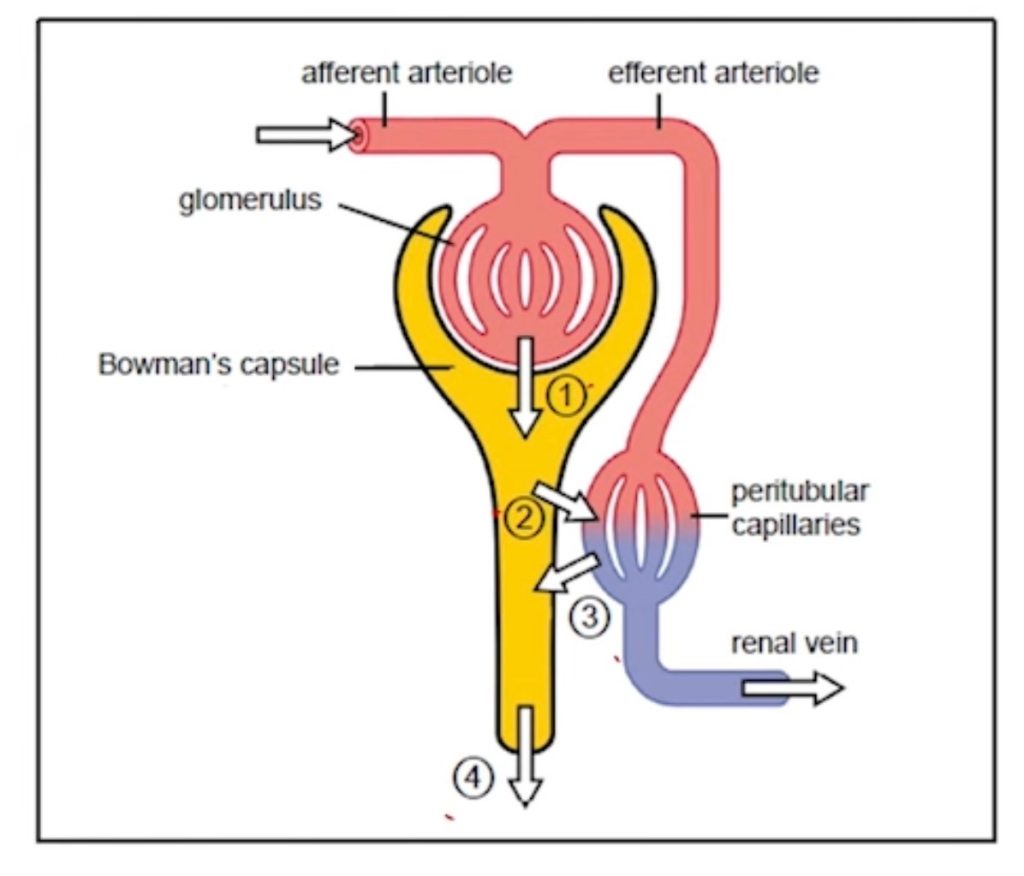
Question: Name the processes shown at 1, 2,3 and 4
- The process at 1 is glomerular ultrafiltration. This is the stage where blood under high pressure enters the glomerulus and forces water, salts, glucose, amino acids and urea out of the blood and into Bowman’s capsule. Only small molecules pass through, while large proteins and blood cells remain in the bloodstream.
- The process at 2 is tubular reabsorption. During this step, the nephron carefully reabsorbs useful substances from the filtrate back into the blood. Materials such as glucose, amino acids, ions and water are returned to the peritubular capillaries so that the body does not lose essential nutrients.
- The process at 3 is tubular secretion. At this point, extra waste materials that were not filtered out earlier are actively moved from the blood into the tubule. These include hydrogen ions, certain drugs, toxins and excess salts. This step helps the body control pH and remove harmful substances.
- The process at 4 is excretion. This is the final stage where the remaining fluid, now called urine, leaves the nephron and flows into the collecting duct. From there it moves to the bladder and is eventually removed from the body.
Question: Mention three substances that move back into the blood at process 2
During tubular reabsorption, the body reclaims valuable substances from the filtrate. Materials such as glucose, amino acids, vitamins and water are taken back into the bloodstream. These substances are essential for energy, growth and maintaining fluid balance, so the nephron ensures they are not lost in urine.
Study the diagram and answer the questions below
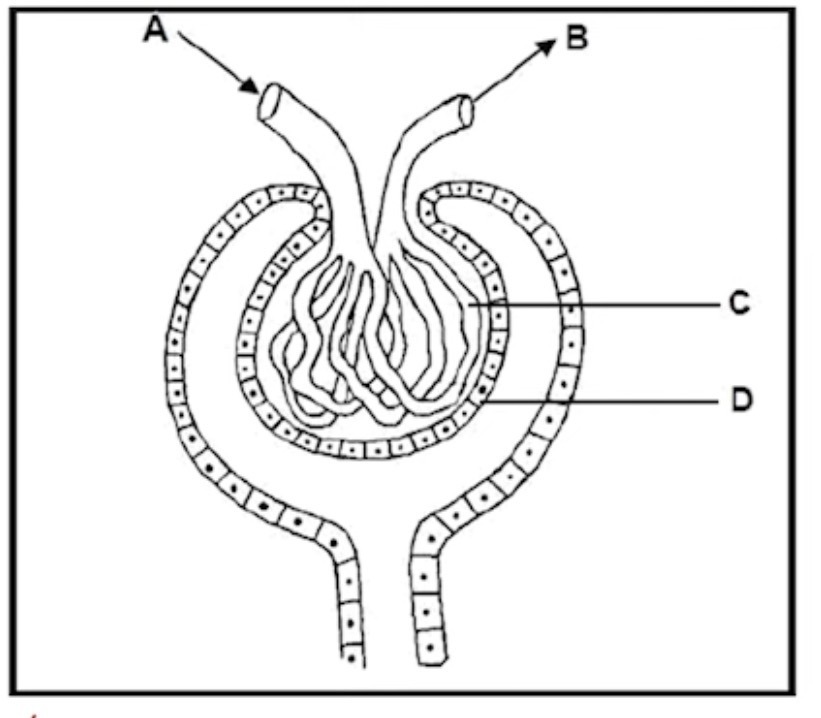
Question: Name Labels A to D.
- A is the afferent arteriole – this blood vessel brings blood into the glomerulus under high pressure.
- B is the efferent arteriole – this vessel carries blood away from the glomerulus after filtration.
- C is the glomerulus – a network of capillaries where ultrafiltration of blood takes place.
- D is Bowman’s capsule – the cup-shaped structure that collects the filtrate forced out of the glomerulus.
Question: In which region of the kidney would you find this structure?
This structure is found in the cortex of the kidney. The cortex is the outer region where the renal corpuscles—made up of the glomerulus and Bowman’s capsule—are located. These structures are responsible for the first step in urine formation, so they are always situated in the cortical region.
Question: Name the process in urine formation that occurs in this structure.
The process that occurs in this structure is glomerular ultrafiltration. During this process, high-pressure blood enters the glomerulus and forces water, salts, glucose, amino acids and urea out of the blood and into Bowman’s capsule. This forms the initial filtrate that will later be modified to produce urine.
Question: Describe the structural adaptations of part C for the process that happens there.
Part C has walls made of a single, very thin layer of cells, which makes it easy for small substances to move from the blood into the capsule. Because this barrier is so thin, filtration happens quickly and efficiently as useful and waste substances can pass through with little resistance.
Part C also contains many tiny pores in its walls. These pores act like small filters that allow only small molecules such as water, salts, glucose and urea to pass through. Larger particles, including proteins and blood cells, are too big to fit through the pores and therefore remain in the bloodstream. This ensures that only the correct substances enter the filtrate.
Part C is surrounded by a large network of capillaries, which creates a wide surface area for filtration. The greater the surface area, the more blood can be filtered at one time. This makes the process faster and more effective, allowing the kidney to clean the blood continuously throughout the day.